
Cricket in 600 words or less
Cricket has a bit of a reputation for being hard to understand, but it’s actually a simpler game than the most popular North American sports. Here’s everything you need to know to enjoy a cricket match in under 600 words.
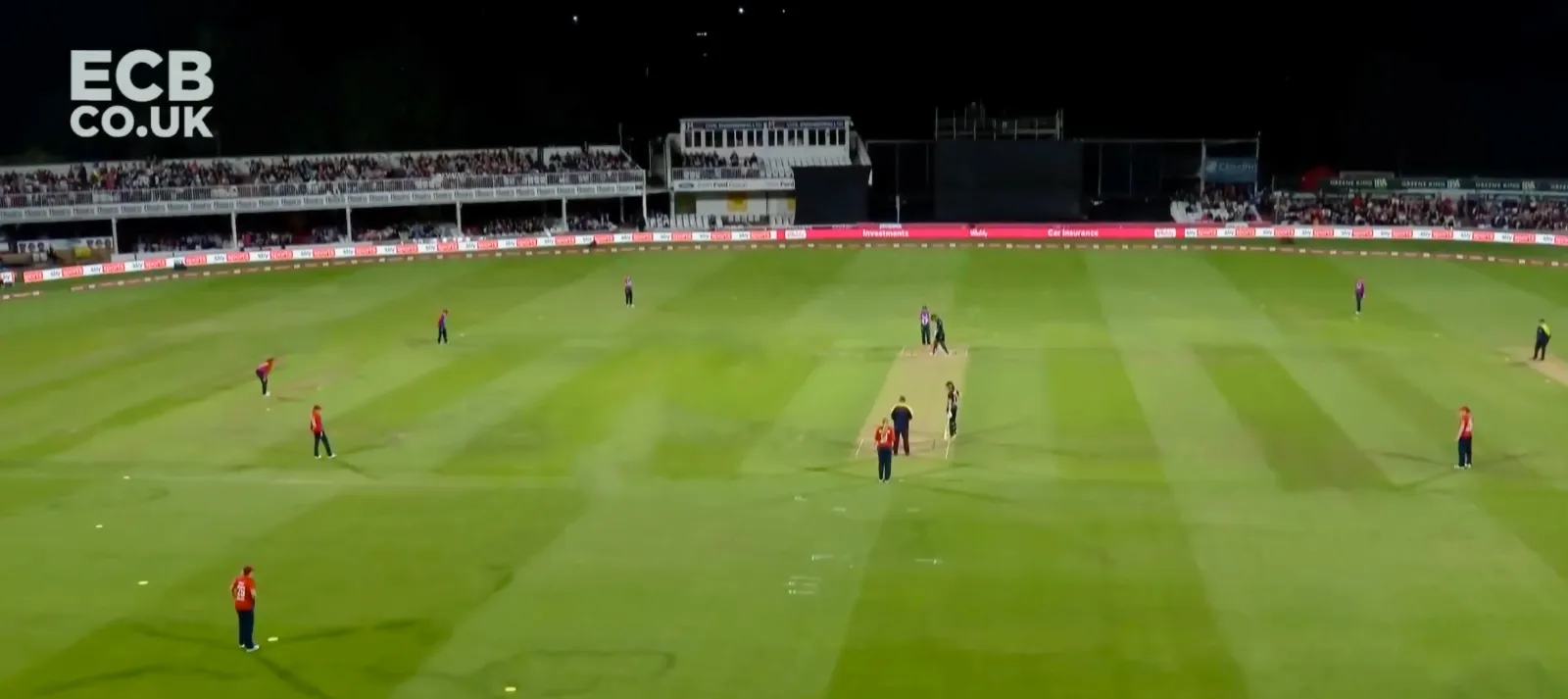
Cricket is played on an oval field with a rectangular pitch in the middle. Two players on the batting team stand on either side of the pitch; the eleven players on the fielding team take up positions around the field.
Runs
The cricket ball is bowled overarm by a player on the fielding team and can bounce once. The batter hits the ball and switches ends with the other batter, scoring one run each time this happens.
If the batter hits the ball all the way to the boundary of the field, they score four runs automatically.
If they hit the ball really hard over the boundary, they score six runs.
Wickets
The goal of the fielding team is to get the batters out (“take their wickets”) before they score lots of runs.
The batter is out caught if they hit the ball and a fielder catches it before it hits the ground.
The batter is out bowled if they miss and the ball hits the wicket behind them.
The batter is out leg before wicket if they use their body to block the ball from hitting the wicket.
The batter is run out if they run and the fielding side breaks the wicket before they’re safe.
The batter is out stumped if they come too far out, miss the ball, and get run out by the wicketkeeper.
Overs
Every six balls, the fielders switch ends and a different player from the fielding team comes on to bowl. Six balls is also called an over.
Each team gets to bat for 20 overs or until they have lost ten wickets. Whichever team has the most runs after both sides bat wins.
Extras
There are a bunch of rules that govern how the ball should be bowled. A violation results in a do-over, except the batting team is awarded an extra run and gets to keep any runs they scored off the illegal delivery.
A wide is signalled if the umpire judges that the ball was bowled too wide or too high for it to be reasonably hit.
A no ball is signalled if the delivery is illegal for another reason, usually because the bowler stepped too far over the white line.
A batter cannot be caught, bowled, stumped, or LBW off a no-ball. Depending on the competition, the batter may be awarded the same immunities for the next ball as well — this is called a “free hit”.
Positions
A typical team roster has some specialist batters who usually don’t bowl, some specialist bowlers who aren’t expected to get lots of runs, and some all-rounders who are good at both batting and bowling.
There are two main bowling styles: fast bowlers rely on the speed of their deliveries while spin bowlers deliver slow but tricky balls.
Each team has a wicketkeeper who stops the balls that get past the batter. You can recognize the wicketkeeper as the only fielder who wears gloves.
Fielders can be deployed anywhere, subject to a few restrictions. Commentators describe fielding positions using funny names like slip, gully, mid-off, square leg, and third man.
Scoreboard
A typical TV broadcast overlay displays the following information:
- The batting team’s current run total and wickets lost.
- The number of overs completed or the number of balls remaining.
- The current batters’ names, runs scored, and balls faced, with some indication of which batter is facing the next ball.
- The current bowler.
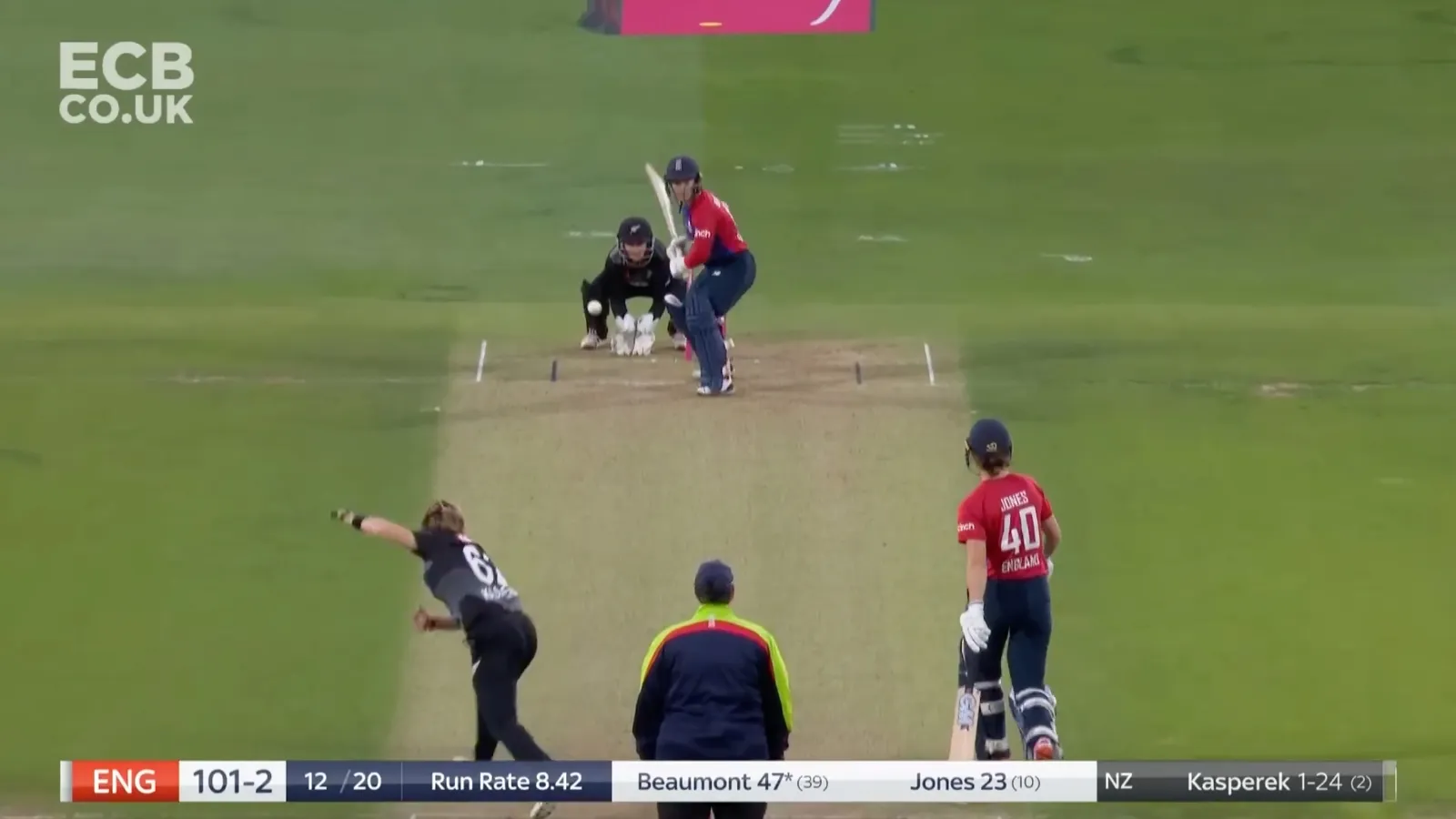
The overlay often shows other relevant information, which may include the current run rate (average runs per over), the target score needed for the team batting second to win, and/or an indication of any special fielding restrictions.
Conclusion
That’s all you need to follow and enjoy a cricket match! All that’s left to learn is some jargon, the names of the players, and the details of whatever tournament or competition you want to follow. You’ll pick up all of those as you go.
Some tournaments worth following are:
- The Men’s Twenty20 World Cup (this June).
- The Women’s Twenty20 World Cup (this October).
- England’s The Hundred (August).
- Australia’s Big Bash League (December–January) and WBBL (November).
- India’s IPL (April–May) and WPL (February–March).
National sides often play series against each other as well.
If you want to watch cricket, most series are carried in Canada by subscription streaming service Willow TV. You can also follow live text summaries and scorecards on sites like ESPN Cricinfo.