Ross Churchley

Book Recommendation

Code: The Hidden Language of Computer Hardware and Software by Charles Petzold
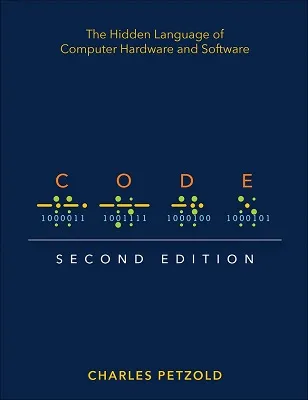
Code is an approachable book that succeeds at an absurdly ambitious goal: to guide a motivated reader from “what is binary?” all the way to “build and program an Intel 8080 microprocessor out of Radio Shack components” without skipping any steps in between.

The book is remarkably self-contained and uses old tech (like the telegraph) to illustrate timeless principles, so it still holds up 20+ years after it was written.

Every new emoji starts with a formal proposal justifying why it should exist. The proposal for 🫵 starts with four pages of the history of people pointing at the viewer in art.

To address the Unicode Consortium’s emoji selection criteria, you’ll find proposals arguing things like mermaids are 522% more popular than goblins or that teapots are not too similar to teacups. Older emoji didn’t go through the same kind of selection process, which is presumably why there are three separate emoji for optical computer media: 📀 💿 💽.

You can find most emoji proposals linked from their Emojipedia page.

Image Evolution is a very interesting Javascript tool based on Roger Johansson’s Evo-Lisa idea. It uses a genetic algorithm to represent images as a collection of overlapping polygons.

Ever wonder why LaTeX doesn’t provide a way for printing the title and author once \maketitle has been issued? I did. So I asked a question on the TeX StackExchange and received an interesting answer. Turns out it’s an artifact of the times when memory was in such short supply that saving a few bytes was worthwhile.