
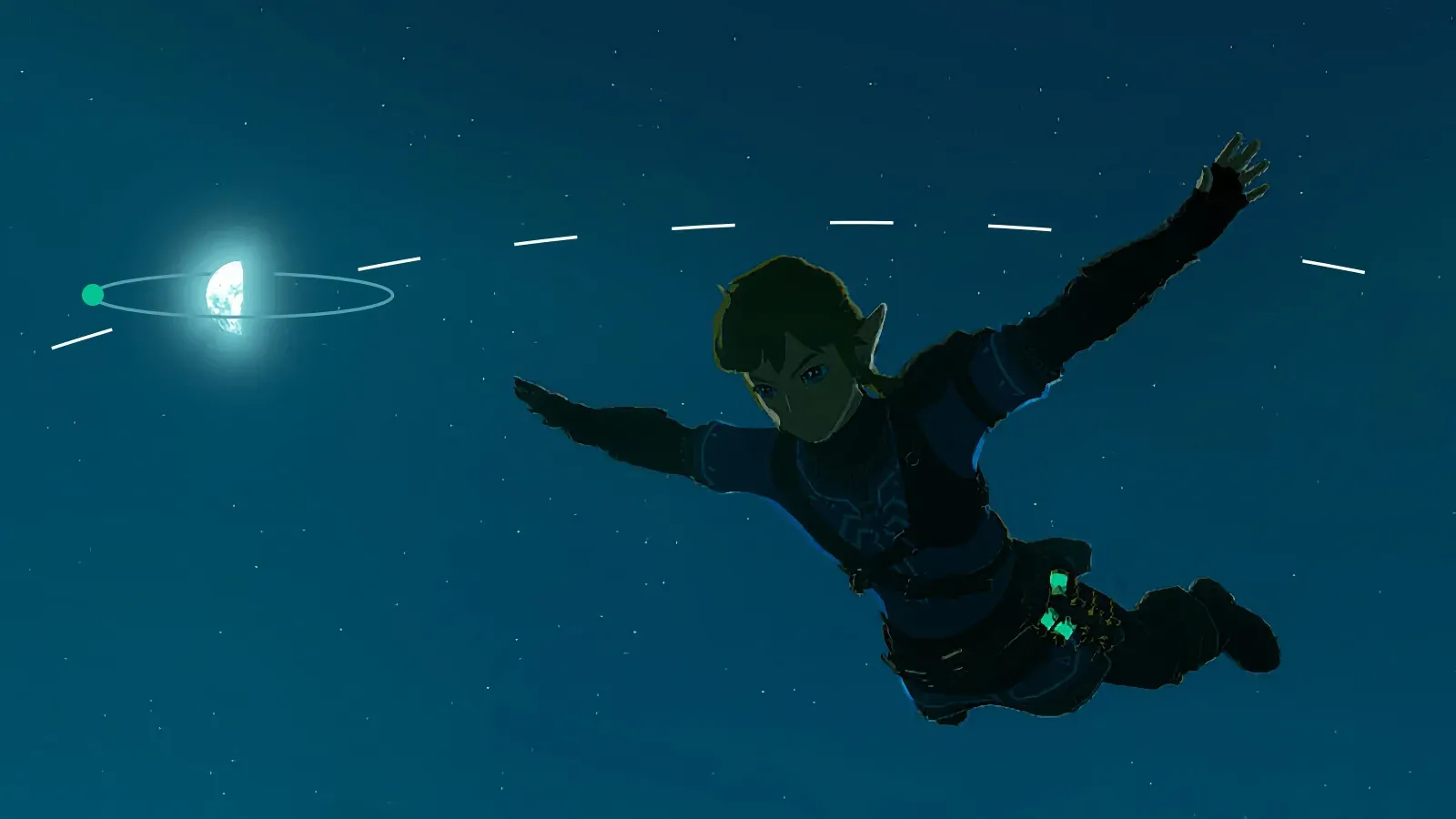
Cosmology of Hyrule
Tears of the Kingdom takes place in a geocentric universe
Tears of the Kingdom takes place in a geocentric universe
Julius Caesar’s given name wasn’t “Julius”. That was his full family name — the Caesars being a branch of the Julia family. His personal name was Gaius.
In his time, he was referred to as Gaius Caesar or simply Caesar by himself and his contemporaries.
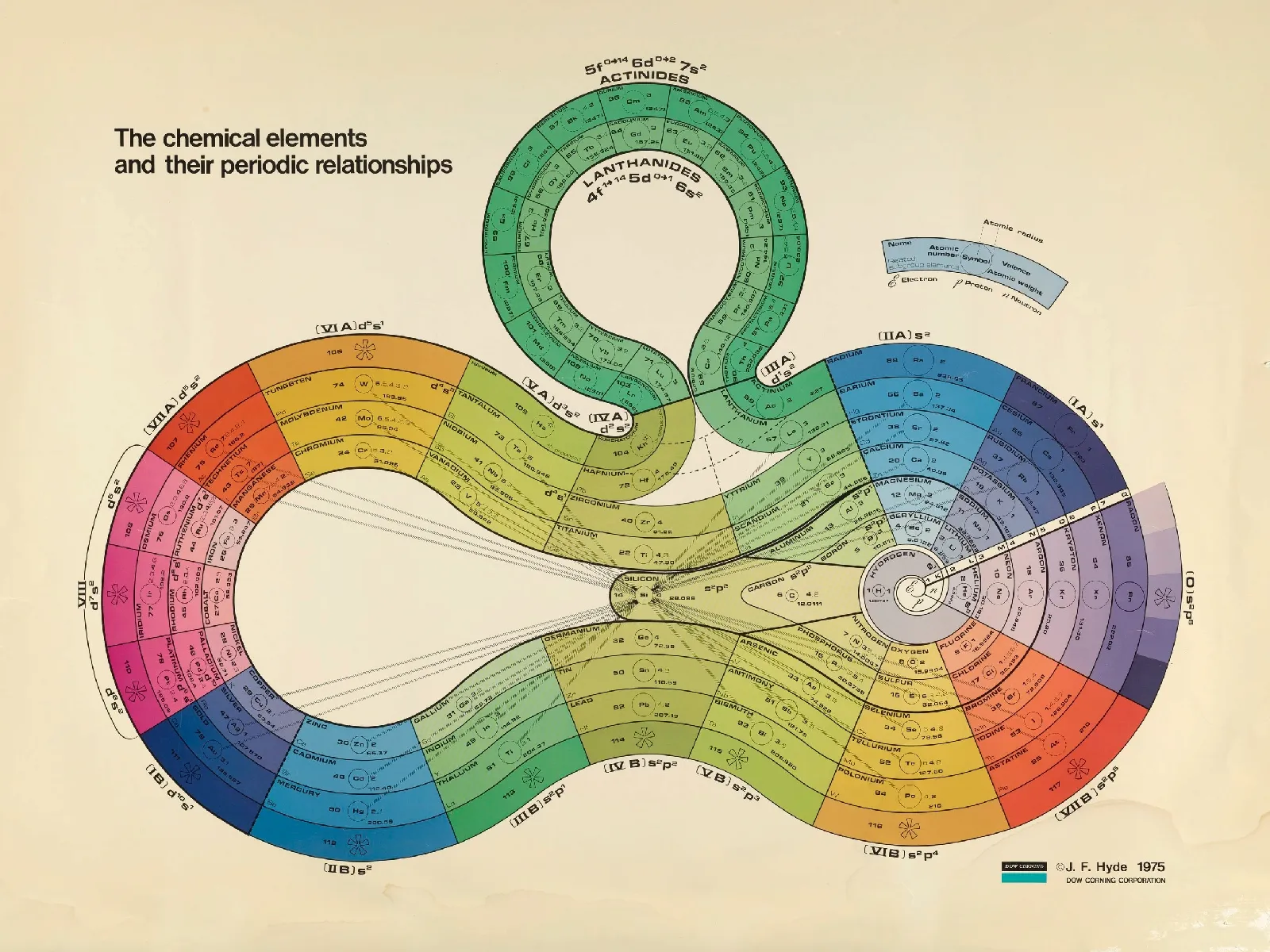
The standard Periodic Table is an iconic data visualization, but it’s not the only way to represent the relationships between elements. This beautiful “ribbon” version was designed by silicone pioneer James Franklin Hyde in the 1970s.
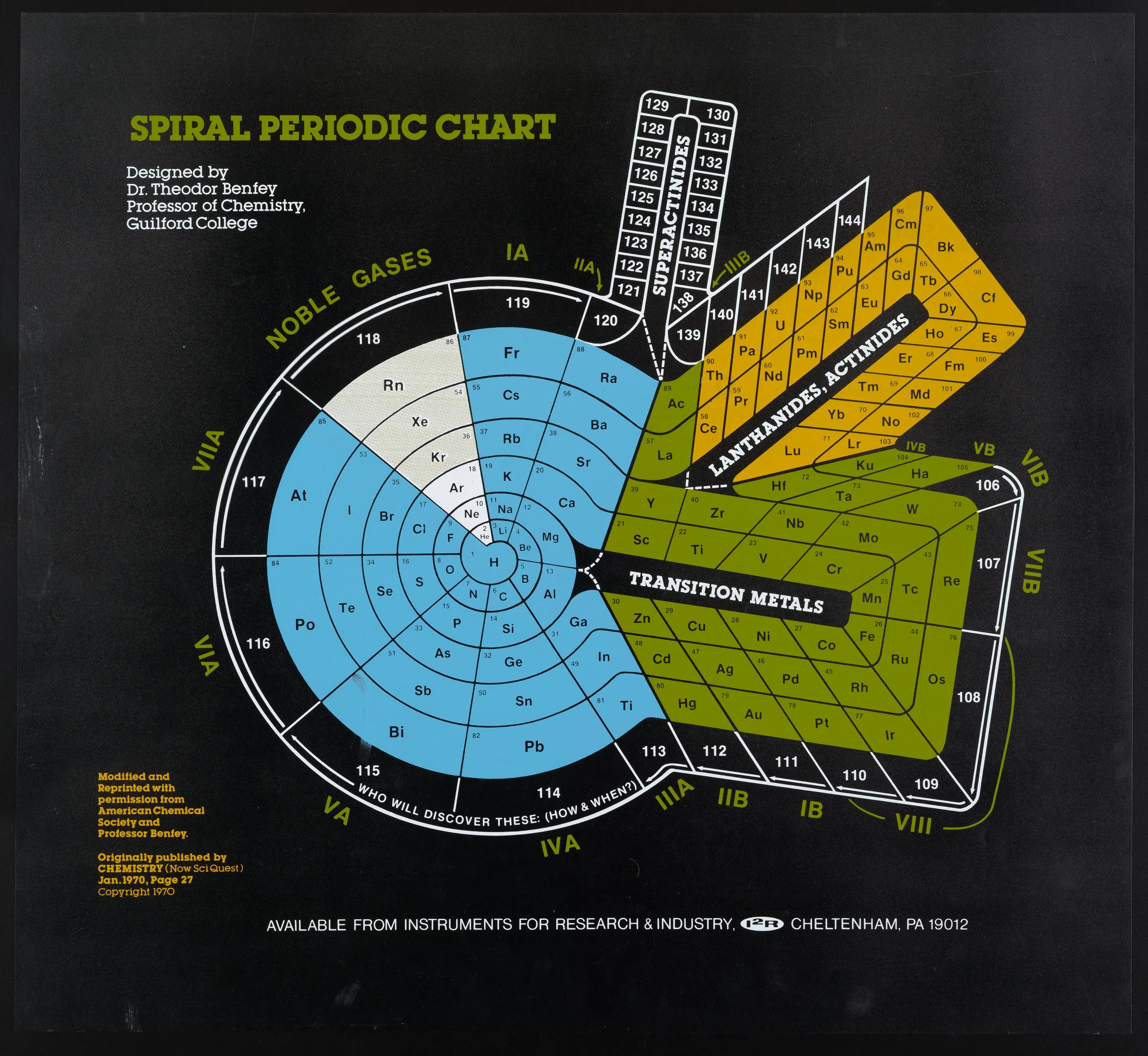
Hyde may have been inspired by the spiral chart published by Theodor Benfey in the same journal a few years earlier.
A lot of intuitive categories we use for plants — trees, bushes, berries, vegetables, and so on — are not based on phylogenetics:
On the evolutionary tree of plants, trees are regularly interspersed with things that are absolutely, 100% not trees. This means that, for instance:
- The common ancestor of a maple and a mulberry tree was not a tree.
- The common ancestor of a stinging nettle and a strawberry plant was a tree.
- And this is true for most trees or non-trees that you can think of.
As another example, cabbages, maple trees, and roses, all members of the rosid clade, are more closely related to each other than they are to their asterid cousins lettuce, holly trees, and sunflowers.
Every new emoji starts with a formal proposal justifying why it should exist. The proposal for 🫵 starts with four pages of the history of people pointing at the viewer in art.
To address the Unicode Consortium’s emoji selection criteria, you’ll find proposals arguing things like mermaids are 522% more popular than goblins or that teapots are not too similar to teacups. Older emoji didn’t go through the same kind of selection process, which is presumably why there are three separate emoji for optical computer media: 📀 💿 💽.
You can find most emoji proposals linked from their Emojipedia page.
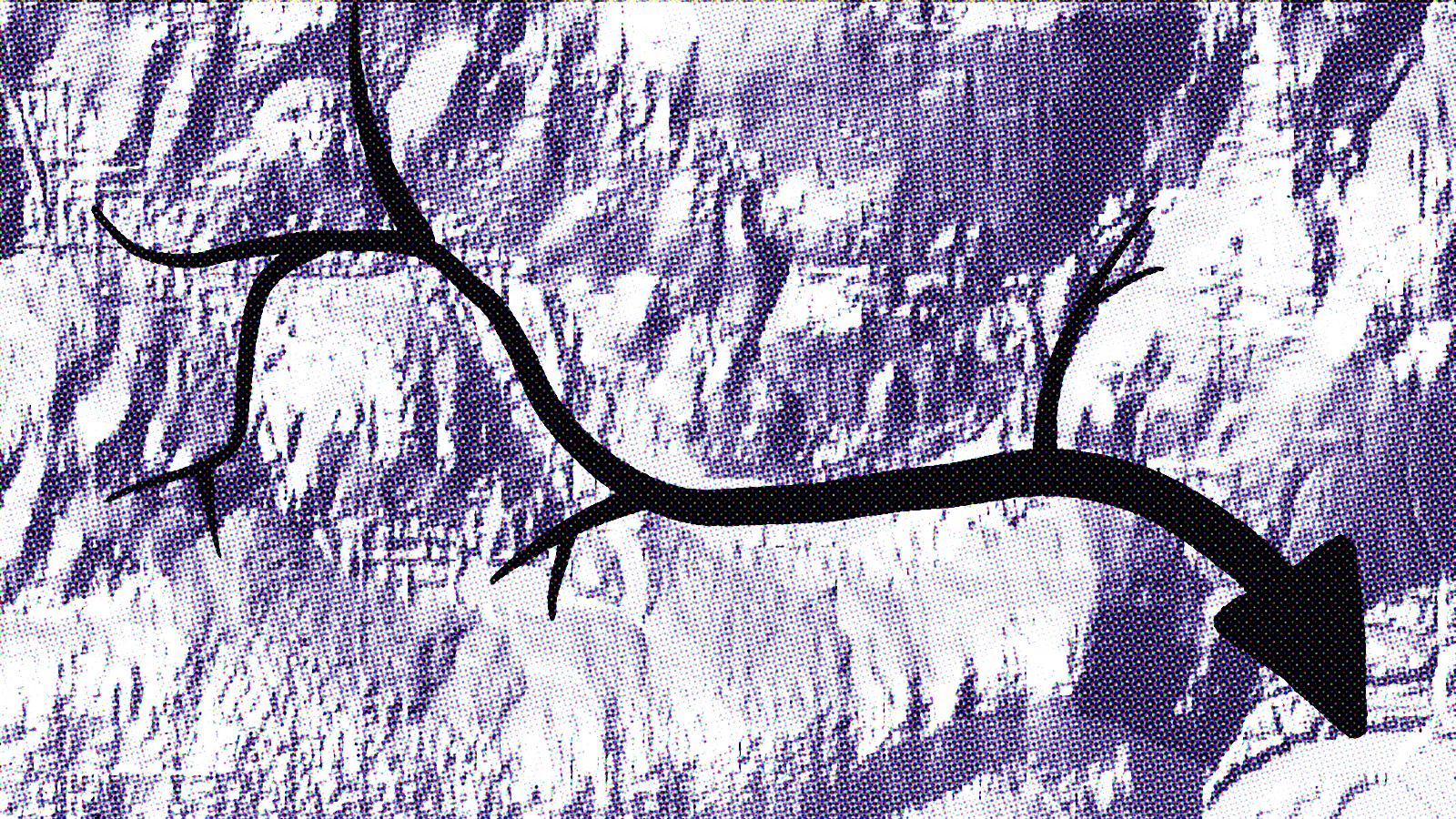
Where Burrard Peninsula's creeks flow
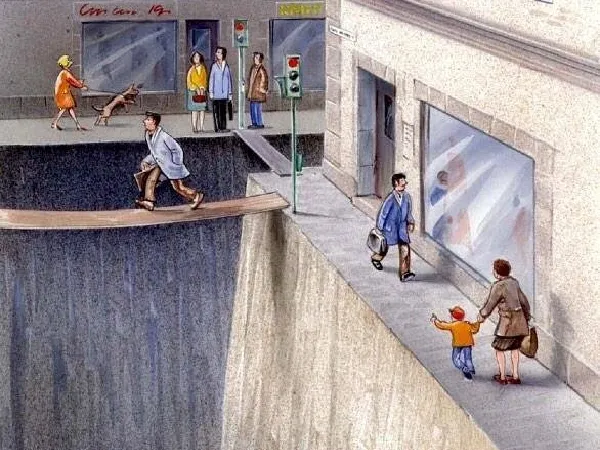
The Swedish source of an urbanist cartoon
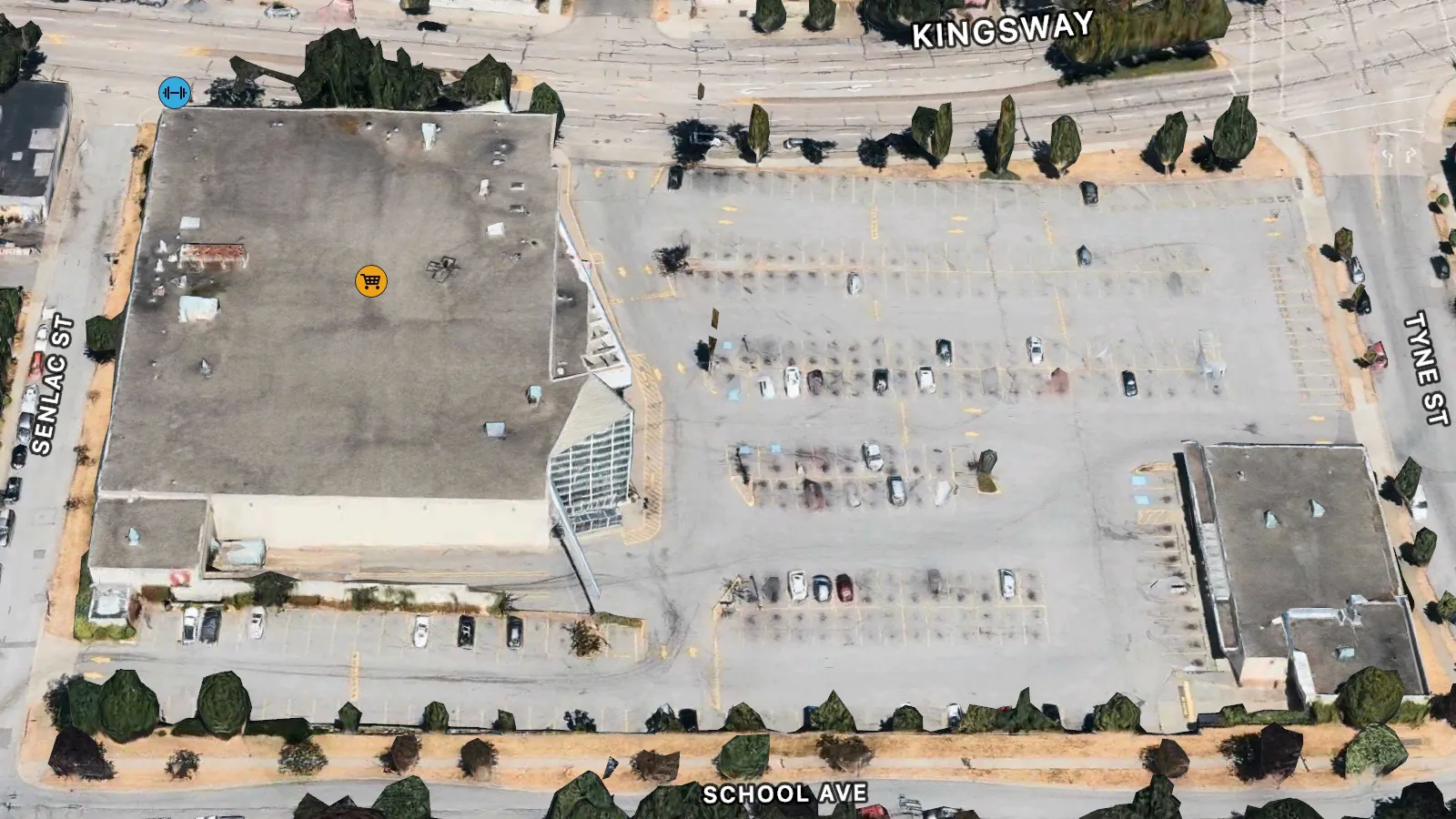
Here in Vancouver, Parking By-law 6059 requires grocery stores to provide
…one additional space for each additional 20 square metres of gross floor area up to 2300 square metres
each of which must be
a minimum of 5.5 m in length and 2.5 m in width.
Put another way, the law requires a 14m² parking space for every 20m² of supermarket floor space.
Adding the necessary lanes to allow cars to get in and out, this law practically guarantees that grocery stores will be more parking lot than store.
In the late ’60s, the Canadian government bought the rights to the English lyrics of O Canada for a dollar. The music and original French lyrics had already passed into the public domain.
Ironically, the copyright to the English lyrics would have expired anyways by the time the National Anthem Act gave official status to O Canada in 1980.
Crayola has a trademark on the smell of its crayons. It’s officially registered as
A unique scent of a pungent, aldehydic fragrance combined with the faint scent of a hydrocarbon wax and an earthy clay.
In Canada, a trademark can be just about anything distinguishing, including “a word, a personal name, a design, a letter, a numeral, a colour, a figurative element, a three-dimensional shape, a hologram, a moving image, a mode of packaging goods, a sound, a scent, a taste, a texture and the positioning of a sign.”
You can get a really good approximation of a sinusoidal curve from twelve equally-spaced line segments of slope 1/12, 2/12, 3/12, 3/12, 2/12, 1/12, -1/12, -2/12, -3/12, -3/12, -2/12, and -1/12, respectively.
This approximation, known as the rule of twelfths, rounds but otherwise uses exact values along the curve.
I learned this from a kayaking instructor, since it’s particularly handy for estimating tides.

Overanalyzing a song's geography
According to dimensional analysis, the time it takes to properly roast a whole turkey is proportional to its weight to the ⅔ power. My old mathematical modelling textbook specifically recommends 45 minutes per lb2/3 when cooked at 350℉.
A precise formula has been derived for a spherical turkey of uniform thermal conductivity and density, though this is somewhat less practical for chefs.
Since the ’50s, Alberta has engaged in a deliberate effort to prevent rats from entering the province. Fortunately, rats can’t survive in the wild in Alberta, so they have pest inspectors regularly check every premise within a 29 x 600 km control zone from Montana to Cold Lake. Pet rats are illegal.
The rat-free status of Alberta led to a Wikipedia edit war over whether the province should appear on a map of the brown rat’s habitat.
The official title of Chief Mouser to the Cabinet Office is held by a cat in charge of keeping mice under control at the UK Prime Minister’s office at 10 Downing Street. The current incumbent is Larry.
Vessel Finder is a map showing the current location of container ships, cruise ships, fishing boats, and other nautical vessels. It aggregates data from automatic identification systems which all sufficiently large boats are required to be fitted with.

An analysis of tweet lengths under Twitter's increased limits
International law requires all ships to display a wheelhouse poster describing the “general particulars” of the vessel.
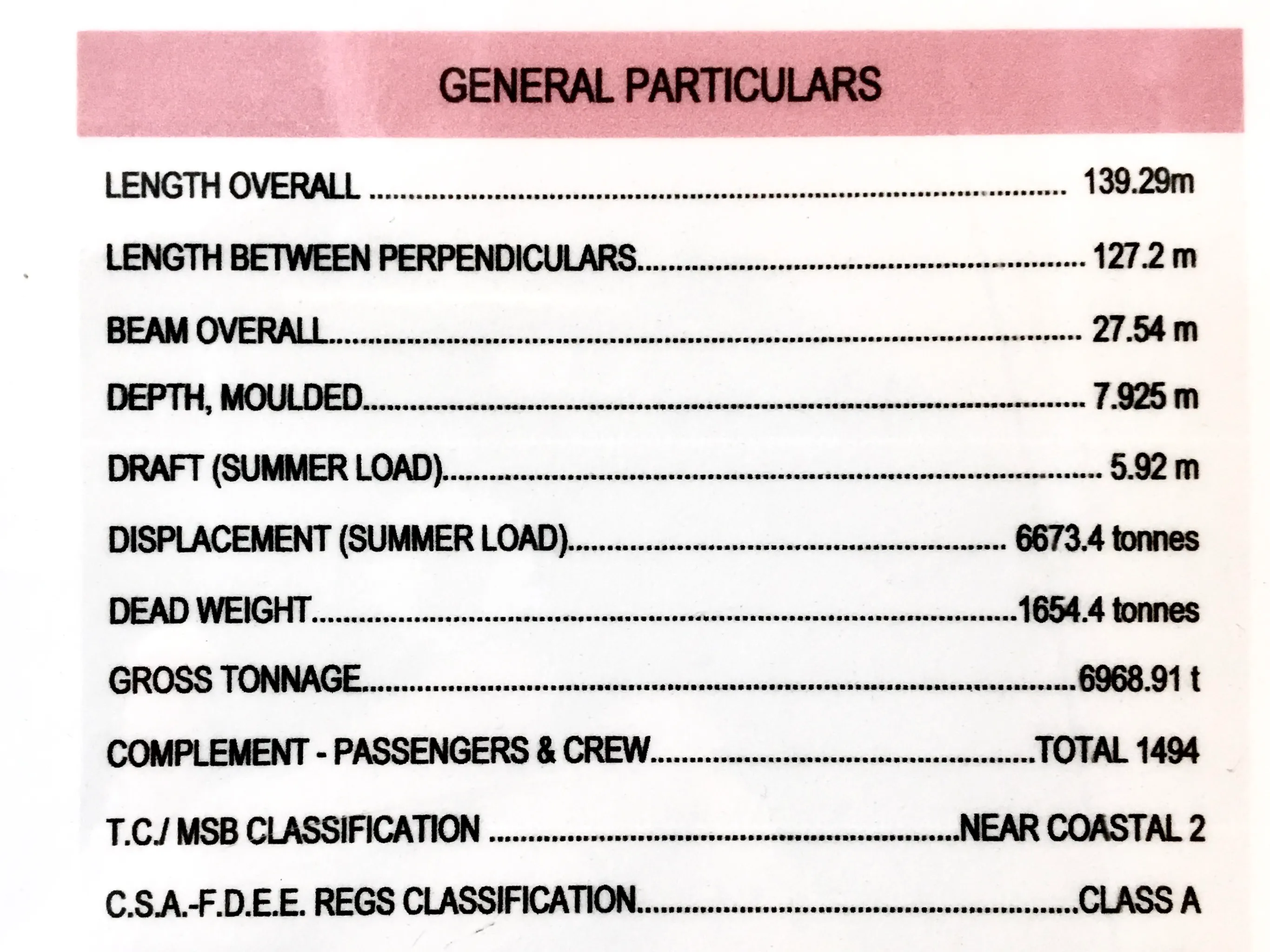
That’s such a great phrase — it ought to catch on more widely!
The head of a sunflower is actually hundreds of smaller flowers working together to attract pollinators. Each large yellow petal is its own individual flower, and the bits in the middle are tiny five-pointed flowers if you look closely.
Sunflowers share this property with the rest of the family Asteraceae, including daisies, dahlias, dandilions, and dozens of “damned yellow composites”.
Computing capture times with electrical networks
Not all 26 letters of the alphabet appear on BC license plates: the province doesn’t issue standard licence plates with I, O, or Q. Letters U, Y, and Z were also absent until 2025.
The first three are too similar to 1 and 0 to be allowed (there is a relevant xkcd). Presumably, U was excluded to minimize the number of accidental rude words.
Originally, the motor vehicle branch was only able to print plates using 10 different characters at a time, so Y and Z missed out just because there wasn’t enough room for them.
Mount Baker was named by George Vancouver after his third lieutenant. Joseph Baker may have been the first on Vancouver’s ship to spot the obvious giant mountain, but he wasn’t even the first European to do so.
A year earlier, the Spanish expedition led by Manuel Quimper had mapped the area and called the peak la gran montaña del Carmelo.
If either explorer had cared to ask the indigenous groups they were around, they might have recognized Mount Baker by the name kwelshan, the term used by the Lhaq’temish (Lummi) people around Bellingham and the San Juan Islands, or swáʔləx̣, reportedly used by the nəxʷsƛ̕áy̕əm̕ (Klallam) people on the Olympic Peninsula.
The mountain itself is surrounded by the traditional lands of the Nooksack and Upper Skagit peoples. The Nooksack use kwelshán for the high open slopes of the mountain and kweq’ smánit for the glacier-covered summit.
“May you live in interesting times” is typically claimed to be a Chinese expression, but it actually originated with the British. Joseph Chamberlain — Neville’s dad — used the phrase “interesting times” frequently in speeches:
I think that you will all agree that we are living in most interesting times. I never remember myself a time in which our history was so full, in which day by day brought us new objects of interest, and, let me say also, new objects for anxiety.
Joseph Chamberlain
